vLine customers are driving innovation in their markets in part due to our WebRTC video and audio platform.
We recently heard from Kevin Leach, founder of In:Quality Media, a UK-based company that provides broadcasting equipment in the homes and offices of TV and radio contributors. Check out this example of how vLine is helping drive engaging, real-time connections.
From Kevin Leach:
On 22nd August we facilitated the world’s first live TV interview using WebRTC. We had spent the preceding months working with vLine to develop a browser-based app enabling live broadcast-quality streaming for our rapidly growing network of Remote Contribution Terminals.

Business analyst Louise Cooper appeared live on rolling news channel Sky News from her home-office, answering questions from the studio anchor on a breaking story about card-protection refunds.
In:Quality has opened new doors to connect experts to news stories. Our service allows them to appear on-air at short notice without the need to visit a studio or to have a live truck attend. A cost-effective internet-based streaming solution was required and has been developed using vLine’s unprecedented WebRTC experience and infrastructure.
WebRTC has huge potential for the broadcast industry thanks to its native high quality, low-delay codecs and its ability to be decoded in any studio with a compatible browser. Traditionally, dedicated hardware and infrastructure has been necessary to achieve the same result, the cost of which has been prohibitively expensive. In some locations we’re reliant on ADSL connections with limited upload, but thanks to the efficiency and flexibility of the OPUS codec, we’re still able to achieve good quality wideband audio.
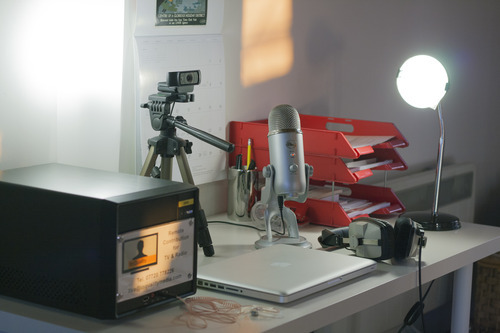
Our Remote Contribution Terminals (above) consist of a small form-factor base unit with prosumer USB webcam and microphone. We’ve had a piece of bespoke software built to control the exposure, focus etc. We use remote access software to manage the equipment remotely so that the interviewee just switches the power on – we do the rest. There’s no need for a local screen, keyboard or mouse which helps reduce clutter, costs and the environmental impact.