Chrome 27
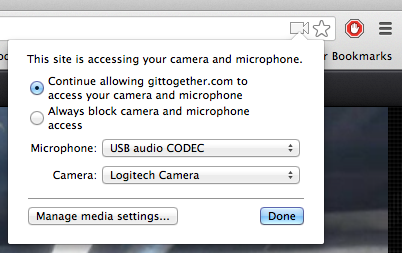
Chrome 27 was officially released. A list of WebRTC-related changes is available on the discuss-webrtc mailing list. One of the most visible changes as an end-user is the ability to select the camera and microphone from the “Omnibox” rather than digging through the Chrome settings.
Temporal Scalability
There was an interesting discussion on the mailing list about temporal scalability and whether controls for it could be exposed in WebRTC through SDP, especially for use with conferencing/mixing. Temporal scalability is a method of encoding a video stream in a format that lets you decode it at multiple frame rates (e.g., 30 FPS or 15 FPS) at the cost of increased encoding overhead. The LifeSize blog provides a nice description in the context of the H264 codec, and the WebM mailing list has a more detailed technical description of how it works in VP8.
Hardware Acceleration
VP8 hardware acceleration continues to be supported by more platforms as nVidia shows with this Tegra 4 demo of 1080p videoconferencing at 30 FPS. The Tegra 4 will have built-in hardware support for both VP8 encoding and decoding, with a stated goal of
Delivering the best WebRTC experience on Android, Chrome OS, and Google TV.